
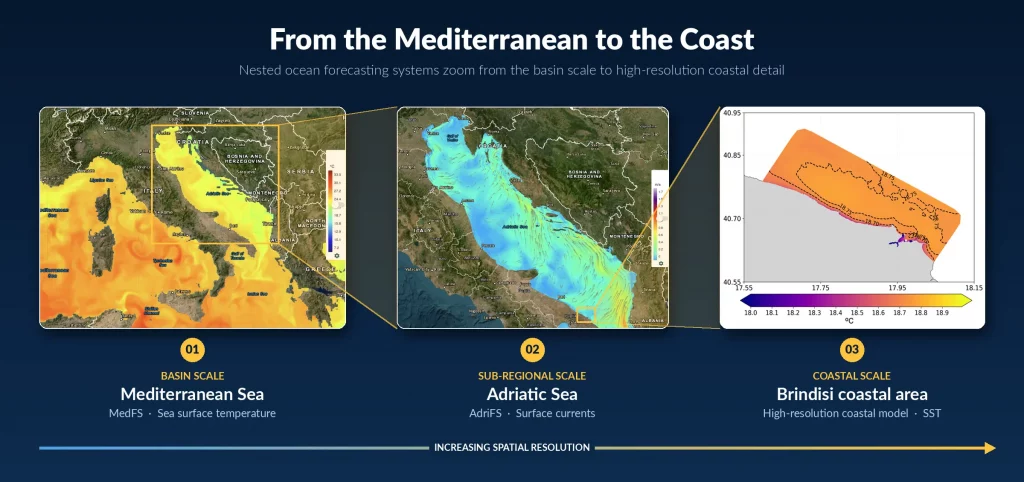
Predicting where and when conditions become favourable for alien species requires looking at the sea from different angles, from the whole Mediterranean basin down to a single coastal bay. Within ALIENA, this is achieved through a multi-scale modelling system, where models at different resolutions work together like a set of zoom lenses, each one refining the picture.
At the basin scale, the Mediterranean Forecasting System (MedFS) simulates temperature, salinity, currents and mixed layer depth across the whole Mediterranean Sea, also providing the large-scale conditions needed to study the occurrence of marine heatwaves, periods of unusually warm water increasingly linked to the spread of non-native species. Zooming in, the Adriatic coastal Forecasting System (AdriFS) reproduces the dynamics of the entire Adriatic Sea at much higher resolution, down to just a few hundred metres along the coast. You can explore its forecasts yourself on the AdriFS platform. Finally, at the pilot-area scale, even finer models simulate the specific conditions of each ALIENA pilot site, from the biogeochemical dynamics of Torre Guaceto’s seagrass meadows to the short-term forecasts supporting early warning for Ostreopsis blooms in the Gulf of Trieste
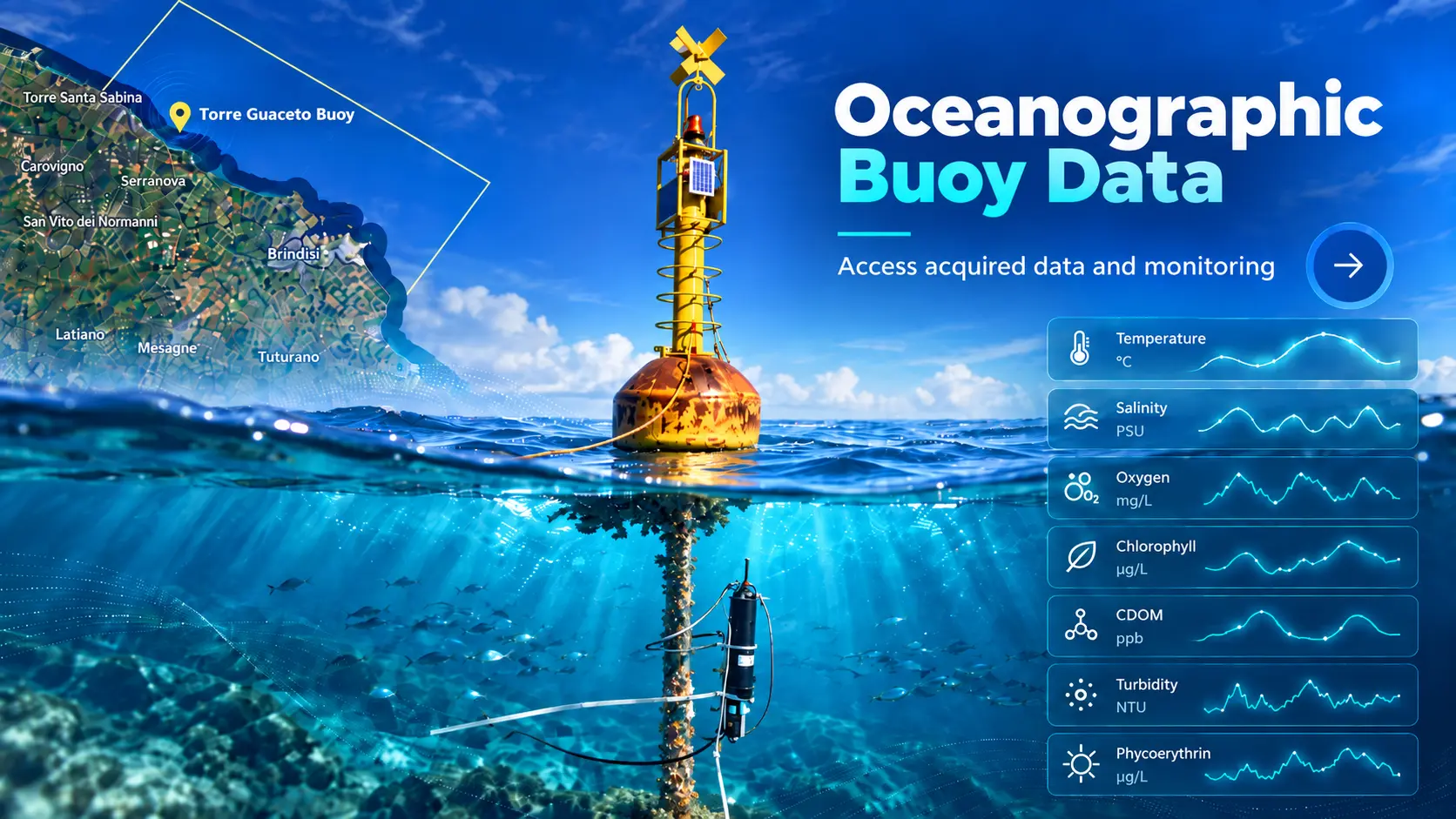
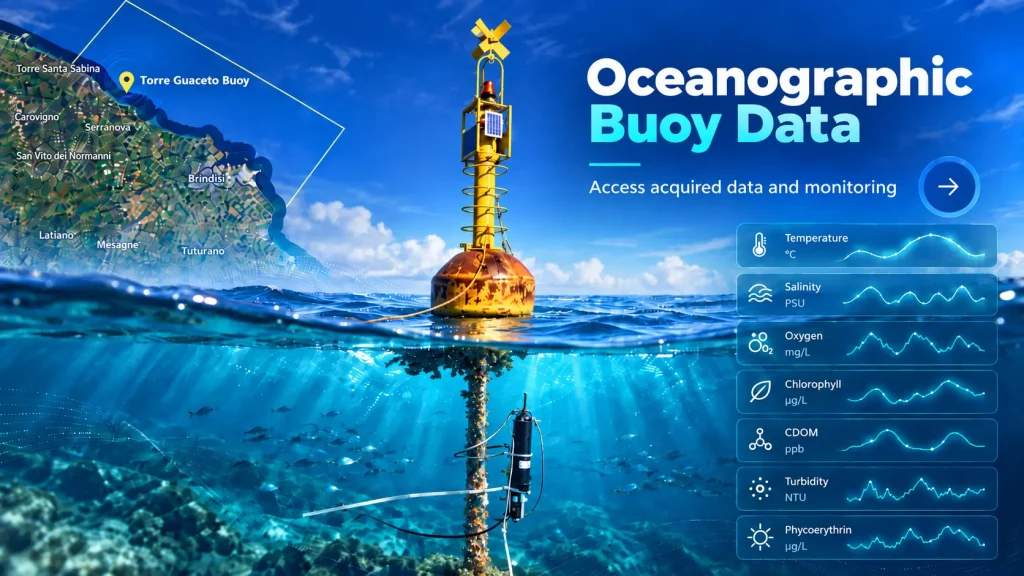
These models are continuously tested and improved using real data collected in the field, including measurements from the Torre Guaceto monitoring buoy, connecting what we observe today with what we can anticipate for tomorrow.
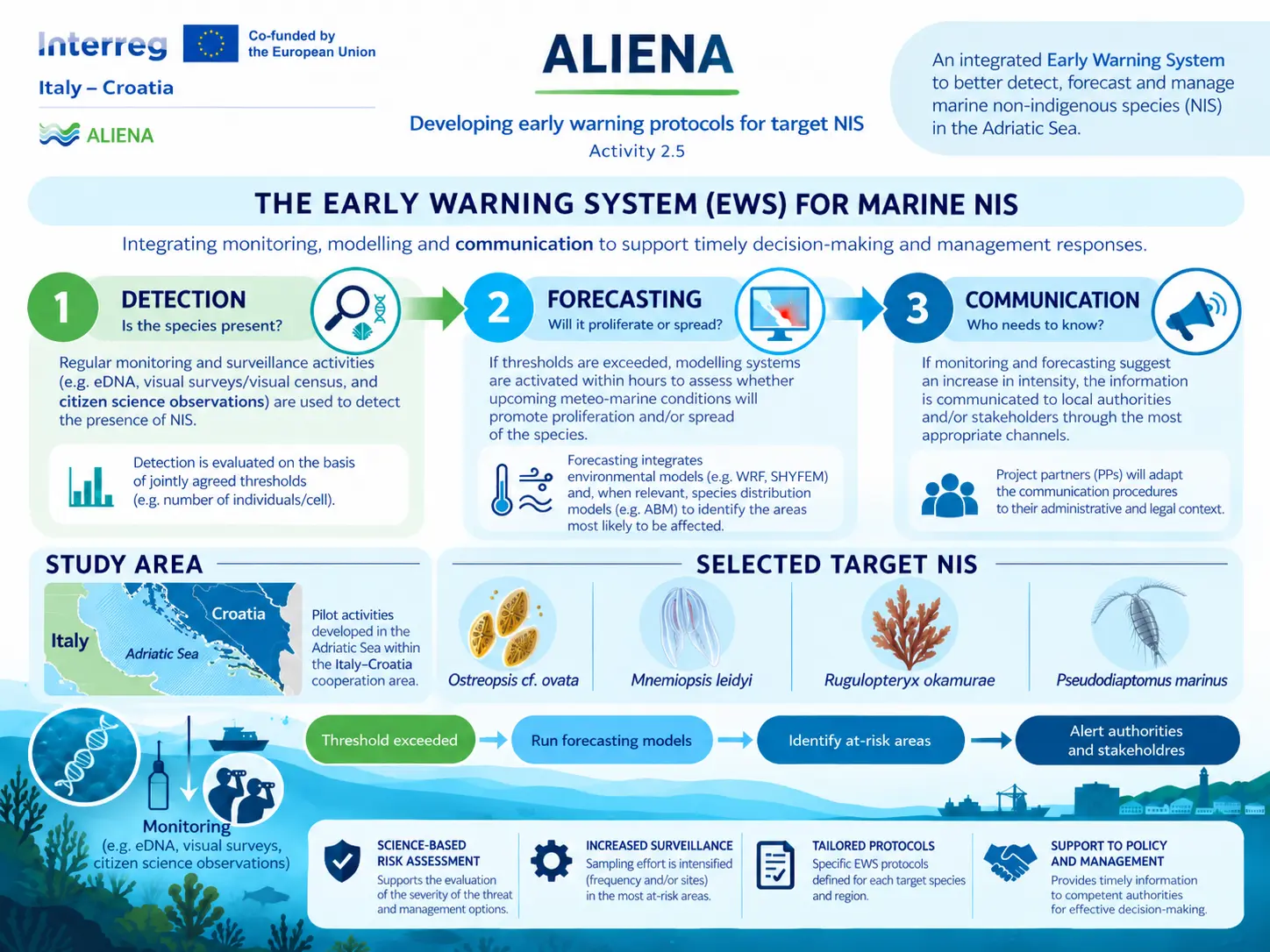
The ALIENA Early Warning System
ALIENA’s Early Warning System combines monitoring, forecasting and communication to track the target species in the Adriatic Sea, from the toxic microalga Ostreopsis to the invasive seaweed Rugulopteryx okamurae. When thresholds are exceeded, environmental models are activated within hours to predict how conditions might favour their spread, so authorities can respond quickly and effectively